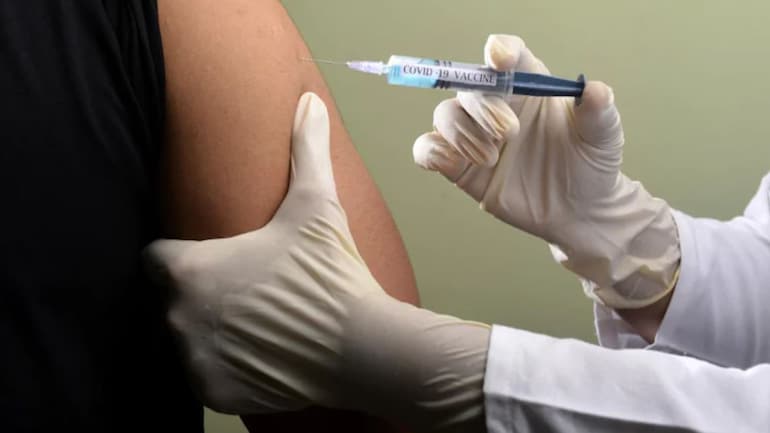
The Central government is trying to speed up Covid-19 vaccination According to the central government has fixed the price of one dose of Corona vaccine that is Rs 250 and the cost of both doses together as Rs 500.This price is fixed for private hospitals but in government hospitals the vaccine will be free of cost. The vaccine will be administered from March 1 on those who are above the 60 years and those above 45 years of age with serious illnesses.

Uncategorized
6th India Pharmaceutical Forum Amplifies Conversation on Patient Centricity and Quality Management
The Indian Pharmaceutical Alliance successfully hosted the 6th edition of the Indian Pharmaceutical Forum. The theme of this is Patient Centricity: New Paradigm in Quality Management on highlighting the importance of sustaining patient-centricity from long term perspective. The event brought together by senior leaders from industry, regulatory agencies, academia and subject experts to facilitate discussion on building excellence in quality management across the pharmaceutical industry worldwide.
“COVID-19 pandemic taught us that quality management systems should be able to address the challenges while maintaining strict compliance with the requirements of the safety, efficacy and quality standards. Indian pharmaceutical industry has been proactive to adapt to the situation in regard to production, supply chain etc. while maintaining best practices.” said Dr. VG Somani, Drug Controller General of India
“The Indian pharmaceutical industry has been at the forefront in the fight against the pandemic. IPA’s focus right from the start of pandemic clearly has been on ensuring supply chain continuity, welfare of the employees, providing thought leadership and stimulating recovery and growth of the industry. Despite the pandemic, IPA has been very active in its core function of policy advocacy with high level engagement with the authorities.” said Mr. Satish Reddy, President, Indian Pharmaceutical Alliance
“COVID-19 exposed global vulnerabilities of the supply chains in the pharmaceuticals sector making the need for innovation & sustainability pivotal to the growth of the sector. While we adopted digital platforms for all our work, sustaining this transformation will be crucial for the next decade. Digital interventions have the potential to help us innovate and improve market share. Innovation, not just in molecular developments but also in existing systems of manufacturing, training, data analysis & storage and much more are equally essential. A sustainable approach to digital transformation can shape the industry as a key growth provider globally.” said Mr. Pankaj Patel, Chairman, Cadila Healthcare Ltd
“Technology has impacted all parts of pharmaceutical pillars such as research, manufacturing, sales and marketing. This will eventually help improve the quality of performance in each of the business areas. These changes will accelerate the speed at which a product is developed and is made available in markets and entail in reduced costs, benefitting patients. Also, the pandemic brought forth the focus on Tele-consultation making it an important aspect in the treatment of patients. I believe tele-consultation will continue to play a huge role by enabling access to quality treatment especially to patients in smaller cities.” Said Mr. Dilip Shanghavi, MD, Sun Pharmaceuticals Industries Ltd
“COVID-19 has once again reinforced the efforts of the healthcare industry towards a patient-centric approach. This year, the 6th Indian Pharmaceutical Forum provided a platform to facilitate a comprehensive discussion on the everchanging shift in quality management, led by significant voices of the industry.” Said Mr. Sudarshan Jain, Secretary General, Indian Pharmaceutical Alliance
SC directs FRC to fix Reasonable fee for Kerala Private Medical Colleges

Supreme Court has ordered the Fee Regulatory Committee (FRC) to fix a reasonable fee for the private medical institutions in Kerala for the academic year 2017-18 on the long-pending matter of MBBS fees in the self-financing medical colleges, in consideration with the previous High Court order.
The apex court reiterated, “Unaided professional institutions have the autonomy to decide on the fee to be charged, subject to the fee not resulting in profiteering or collection of capitation fee.”
The present case in the Supreme Court is related to the fee fixation by the Admission and Fee Regulatory Committee for MBBS students in private self-financing medical colleges in the State of Kerala.
Earlier the Kerala Government moved the apex court demanding to put a stay on the interim order produced by the high court, where it stated that in the absence of the National Medical Commission (NMC) Act that came into effect in 2019, the private medical colleges should accept a fee stipulated by a State Fee Committee on the basis of an SC order that had stated that the fees should be fixed on the basis of the financial capacity of the students.
Apex court bench comprising Justice L. Nageswara Rao and S. Ravindra Bhat have further instructed on Thursday to complete the entire exercise within a period of three months from the date of the verdict, i.e. 25 Feb, 2021, opining that “a reasonable opportunity should be given to the management of private self-financing colleges in respect of their proposals for fee fixation.”
When the Kerala High Court examined the laws laid down by the Supreme Court with respect to fixation of fee for professional courses in unaided medical colleges, it held that the institutions shall propose the fee structure and the scrutiny by the Committee should only be for the purpose of ensuring that the fee had not been exploitative and that the institutions had not been indulging in profiteering or collecting capitative fee.
The High Court added that the committee may direct the colleges for the purpose of ensuring that they submit the audit accounts of previous years to determine that no profiteering has been done by the institutions in fixing the fees. It clarified that the Committee couldn’t go into desirability or appropriateness of expenses incurred by the institution as per its own notions and standards.
Based on the order pronounced by the High Court, the Fee Regulatory Committee (FRC), led by a retired HC judge, had fixed the fee ranging from Rs. 6.32 Lakh to Rs. 7.65 Lakh for MBBS courses in various self-financing colleges for the academic year. However, some of the self-financing medical colleges had been demanding fees of more than Rs. 20 Lakh and filed a case in the High Court.
The managements’ of private self-financing colleges approached the High Court of Kerala challenging the order passed by the committee by which the fee fixed for years 2017-18 and 2018-19 had been repeated once again. The HC then directed the managements of private self-financing colleges to provide a statement, accompanied by an affidavit and a particular list of required documents. Prima facie, the High Court was convinced that the committee did not reconsider the matter after the judgement of the High Court.
Mentioning that the delay in finalizing the fee in medical colleges is a drawback for institutions and the students, the Supreme Court bench has directed the Committee to expeditiously reconsider the proposals of the private self-financing colleges for fee fixation from 2017-18 onwards. It also mentioned that fee for earlier years also need to be finalized in case it has not been done with respect of any college.
“We direct the Committee to expeditiously reconsider the proposals of the private self-financing colleges for fee fixation from 2017-18 onwards. Needless to mention that fee for earlier years also needs to be finalized in case it has not been done in respect of any college. It can direct the managements to furnish any information that is required for the purpose of arriving at a decision that the fee proposed by the managements is neither excessive nor exploitative in nature. A reasonable opportunity should be given to the managements of private self-financing colleges in respect of their proposals for fee fixation.”

According to the engineers of Rice University, Covid-19 can now be detected in 55 minutes or less with the help of programmed magnetic nanobeads and a diagnostic tool that plugs into an off-the-shelf cell phone and the results will be delivered into the phone.
The Rice lab of mechanical engineer Peter Lillehoj has developed a stamp-sized microfluidic chip that measures the concentration of SARS-CoV-2 nucleocapsid (N) protein in blood serum from a standard finger prick. The nanobeads bind to SARS-CoV-2 N protein, a biomarker for COVID-19, in the chip and transport it to an electrochemical sensor that detects minute amounts of the biomarker.
Lillehoj said, “What’s great about this device is that it doesn’t require a laboratory. You can perform the entire test and generate the result at the collection site, health clinic or even a pharmacy. The entire system is easily transportable and easy to use.”
The new tool relies on a slightly more complex detection scheme but delivers accurate, quantitative results in a short amount of time. To test the device, the lab relied on donated serum samples from people who were healthy and others who were COVID-19-positive.
A capillary tube is used to deliver the sample to the chip, which is then placed on a magnet that pulls the beads toward an electrochemical sensor coated with capture antibodies. The beads bind to the capture antibodies and generate a current proportional to the concentration of biomarker in the sample.
The potentiostat reads that current and sends a signal to its phone app. If there are no COVID-19 biomarkers, the beads do not bind to the sensor and get washed away inside the chip.
Lillehoj said it would not be difficult for industry to manufacture the microfluidic chips or to adapt them to new COVID-19 strains if and when that becomes necessary.
The National Institutes of Health, the National Science Foundation and the Rice University COVID-19 Research Fund supported the research.
The Union Ministry of Health and Family Welfare has announced about the vaccination drive halted for two days February 27 and 28 on account of software change necessary for the second phase of vaccination.The second phase of the COVID-19 vaccination drive is for those aged 60 years and those above 45 years with co-morbidities.
The second phase vaccination will begin from March 1 across the country.The pause for Two days comes at a time when India criticized for slow vaccination process.The vaccination in India was started from January 16 and first jab were given to Healthcare workers and second Jab started for Frontline workers like police personnel , armed forces , municipal workers, Teachers etc.
The high level meeting also conducted with States and UTs to inform and explain about the 2.0 of the digital platform Co-WIN.
“The States and UTs wee explained the basic features of version 2.0 of the digital platform Co-WIN. Private sector hospitals will be involved as COVID Vaccination centres to harness their potential to expand the vaccination capacities.” Said Government of India.
Breaking – High level meeting chaired by Top officials on Vaccine Administration
According to the information given by Government of India, “Union Health Secy, Chairman of Empowered Group on Vaccine Administration (Co-WIN) & member, National Expert Group on Vaccine Administration of COVID chaired a high-level meeting today with Health Secretaries & MDs of States/UTs on vaccination of age-appropriate groups today.” reports ANI
“Advance Self Registration, On-Site Registration & Facilitated Cohort Registration of potential beneficiaries explained to States &UTs. Beneficiaries to be captured on CoWIN2.0 platform, issued QR Code based provisional (on receiving the first does)&final certificates.” Said Government of India
Sun Pharmaceutical Industries Limited has announced the U.S. launch of the website for its long-term care (LTC) division. www.sunltc.com. The new website will work as a support for up to 40% America adults with the alternative formulation products who cannot or will not swallow solid medication forms.
The new website gives efficacy and safety profile for each product, while also educate healthcare providers and patients about intent risks involved with improper medication manipulation.
The website will be helpful to avoid medical errors related to alternative – formulations of products which are designed for up to 40% US adults who cannot or will not swallow medications in solid forms.
“Through this website, Sun Pharma aims to call attention to the broad need for our three alternative sprinkle formulations of widely prescribed medications, which are designed for those who cannot or will swallow solid medications forms ,” said Mark Hagler , Senior Vice President and Head of Ophthalmics , Oncology and LTC at Sun Pharma

Glenmark Pharmaceuticals received the “Indian Pharma Innovation of the Year” Award from the Government of India, as the part of the Indian Pharma & India Medical Device Awards 2021, it announced in a press release.
The 6th edition of the annual awards is jointly organized by the Department of Pharmaceuticals, Ministry of Chemicals & Fertilizers, The Federation of Indian Chambers of Commerce & Industry (FICCI) and Invest India.
The award acknowledges Glenmark’s patents and innovations over the last three years, in its core therapy areas of Dermatology, Respiratory and Oncology. It also recognizes the company’s contribution to the healthcare sector, in meeting both pressing and long-term patients needs.
Commenting on the award win, Mr. Glenn Saldanha, Chairman and Managing Director of Glenmark Pharmaceuticals, said, “Now more than ever, we see the need for continuous innovation in pharma and healthcare to address infectious and chronic diseases. Our goal at all times is to be future-ready, and to this end, innovation is ingrained in all our efforts. We thank the government for its recognition; it serves as an encouraging reminder to keep up our good work in India and the world.”
Glenmark earlier won awards from the Department of Pharmaceuticals under the categories of Indian Pharma Leader Award (2015), Company of the Year (2016), and Corporate Social Responsibility Program of the Year (2017).
About Glenmark:
Glenmark Pharmaceuticals Ltd. (GPL) is a global research-led pharmaceutical company with presence across Generics, Specialty and OTC business with operations in over 50 countries. For more information, visit www.glenmarkpharma.com .
With the Union Ministry of Health & Family Welfare likely to finalise the long pending National Policy on Rare Diseases and notify it by March 31st, serious concerns are now being raised by patients and the support societies that the revised policy may meet the same fate as the earlier National Policy for Treatment of Rare Diseases 2017 without any provision to support treatment of patients, diagnosed with Group 3 disorders like Lysosomal Storage Disorders (Gaucher disease, Pompe disease, MPS I and Fabry disease).
Patient advocacy groups like the Organisation for Rare Diseases India (ORDI) and Lysosomal Storage Disorders Support Society (LSDSS) are concerned that the Union Ministry’s proposed crowdfunding mechanism may be inadequate, just like the provisioning under the umbrella scheme of Rashtriya Aarogya Nidhi (RAN), to provide immediate treatment support to patients with these life threatening conditions – categorised as Group 3 disorders – and particularly those for which the Drugs Controller General of India (DCGI) approved therapies are available.
According to patients, long awaiting support to start treatment, the Union of India, should make immediate necessary provisions for all orphan diseases, as has been done by many other countries.
In the absence of a National Policy on Rare Diseases, a few states down South have sought support from the Union of India to provide matching grant in order to sustain the ‘proof of concepts’ shown in providing the much-needed funding support to patients diagnosed with life-threatening rare disease conditions, including Lysosomal Storage Disorders (LSDs).
Categorised as Group 3 disorders, these category of rare diseases like Pompe disease, Gaucher disease, Fabry disease and MPS I are serious chronic, debilitating and fatal disorders, often requiring long term, specialised treatment and chronic management and often causing severe handicap and a catastrophic impact on the entire family. These group of rare diseases particularly impact children, causing 35% of deaths before age 1, 10% between the ages of 1-5 and 12% between 5-15 years.
While Karnataka has embarked on this progamme for close to 5 years now for providing treatment support to these children, Kerala and Tail Nadu are the two other states which have allocated funds from the state exchequer to provide the life-saving therapies to a few of these children.
Karnataka has reportedly spent around INR 40 crore on providing treatment and other life support to the patients diagnosed with rare diseases, in September 2020 the Kerala state government started an initiative to enrol two toddlers suffering from Pompe disease for the life-saving Enzyme Replacement Therapy (ERT) at the Government Medical College, Kozhikode. The infusion therapy was started following an order by a division bench of the Kerala High Court hearing a writ petition filed by the Lysosomal Storage Disorders Support Society (LSDSS), a patient advocacy group, set up to fight the cause of rare disease patients across the country. Under order of the Kerala High Court, the Centre allotted an amount of INR 1.5 crore while the state sanctioned another INR 50 lakh for the treatment of the two patients. Interestingly, members of the Kerala High Court Advocates’ Association, following an appeal by the High Court, also mobilised an amount of INR 5 lakh for the treatment of the rare disease patients.
As for Tamil Nadu, in March 2020 the Madras High Court had directed the Centre to pay INR 4.4 crore for treatment of Rare Disease patients in Tamil Nadu. In the same order, the High Court had also instructed the Tamil Nadu government to allocate INR 5 crore for the treatment of the 11 Rare Disease patients in the state following a public interest litigation filed by Delhi-based Lysosomal Storage Disorder Support Organization (LSDSS) in the Madras High Court, seeking financial aid from the government for the treatment of Rare Disease patients in the state of Tamil Nadu.
The health departments of each of the three states have also written to the Union of India to support the initiative by providing matching grant in order to provide sustenance to the programme besides allowing a scope to expand the treatment support to other eligible patients, awaiting for funding support for a long time.With Rare Disease Day being celebrated worldwide on 28th February each year to raise awareness about the Rare Diseases.
15 new medical colleges to be started next year, says CM Yogi Adityanath

Uttar Pradesh will start 15 new medical colleges to the MBBS course and each college will have 100 seats, informed CM Yogi Adityanath while addressing a liver transplant program in a private hospital of Alambagh on Thursday.
CM said that from 1947 to 2016, there were only 12 state colleges with MBBS syllabus but suffered severe shortage of doctors. Now that the government is determined to end this crisis from root, it has prepared roadmap for 30 new medical colleges.
Opening of these colleges has started in a phased manner with 7 colleges opening in the first phase in which the process of MBBS admission started last year. Next 8 colleges are ready and will be admitted to MBBS from this academic session. The remaining 15 will be admitted next year.
He added that the state is setting new dimensions in the field of medicine. With the help of the central government, two AIIMS have opened in UP where the treatment is being provided to patients. Admissions to MBBS courses have also been taken. The opening of new colleges will remove the shortage of doctors and wait for treatment of patients will be less.