


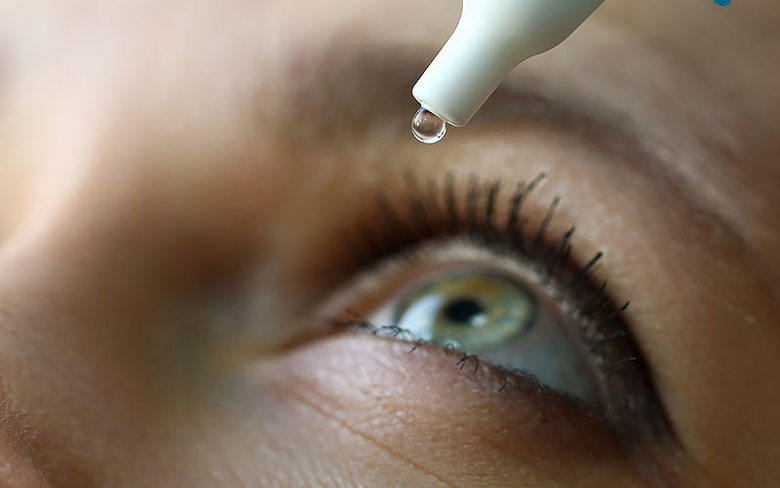
Glaucoma or Kala-Motia is an eye disease which is one of the leading cause of blindness. Glaucoma is fairly common in adults over the age of 35. When diagnosed early, blindness from glaucoma is almost always preventable.
Glaucoma is a disease which afflicts over 60 million people across the world – glaucoma and more than half of them do not even realize it until it is too late. Rightly called the Silent Vision Stealer, glaucoma creeps up on unsuspecting victims and by the time it is detected, it is often too late to save the vision.
Glaucoma affects the optic nerve which transmits visual messages to the brain. The nutrition to the eye is supplied by a fluid and in normal eyes the pressure of this fluid remains balanced. But with age, disease, trauma or other factors, the channels carrying the fluid gets blocked, increasing the pressure inside the eye.
According to Dr. Vineet Sehgal, Senior Glaucoma Consultant, Sharp Sight eye Hospitals, “In most cases, there are no symptoms of this increased pressure. The disease works silently, damaging the outer or peripheral vision first while maintaining the central vision. By the time the problem is detected, the patient has already suffered extensive peripheral vision damage which is irreversible.”
There are three major categories of Glaucoma:
1. Primary Open Angle or Chronic Glaucoma: This is the most common form of glaucoma. Damage to the vision in this type of glaucoma is gradual and generally painless.
2. Closed Angle or Acute Glaucoma: In this type of glaucoma, the intraocular pressure increases very rapidly due to a sudden and severe block of fluid drainage within the eye. Significant symptoms indicating the presence of acute glaucoma appear immediately. This condition has to be treated quickly by an ophthalmologist otherwise blindness may occur.
3. Other type of Glaucoma such as congenital Glaucoma and Secondary Glaucoma.
Glaucoma in early stages generally does not show any noticeable symptoms. Chronic Glaucoma progresses too slowly to get noticed.
SOME COMMON SYMPTOMS OF CHRONIC GLAUCOMA COULD BE:
- Inability to adjust the eyes to darkened rooms such as theaters.
- Frequent changes in eye-glass prescription.
- Gradual loss of peripheral vision.
- Blurred vision
- Headaches.
- Poor night vision.
In case of Acute Glaucoma resulting from rapid increase in the intraocular pressure, there could be severe symptoms. These include:
- Feeling of a blind area in the field of vision.
- Seeing rainbow coloured halos around lights.
- Severe eye pain, facial pain.
- Red eye.
- Cloudy vision with halos around light.
- Nausea and vomiting.
Regular eye check-ups can help catch glaucoma at a very early stage, reducing the chances of vision loss. So, everyone who is in the high risk group should get themselves tested.
“People with a family history are at highest risk and should get an annual test done, irrespective of their age. Others who fall in this category are diabetics, hypertensive patients, thyroid patients and those with a high plus or minus power.”Dr. Vineet Sehgal, added
Which are the high risk groups who can get Glaucoma?
- Family history of glaucoma.
- History of diabetes.
- People having high minus or plus numbered glasses.
- Age above forty years.
- People suffering from hypertension
- Any body who has undergone any kind of eye surgery
- People with thyroid gland related ailments.
- People with over-mature cataracts
- People with an injury to the eye.
- People with a history of prolonged use of steroid eye drops.
Points to Remember
- There is no prevention, however, glaucoma is treatable.
- Sometimes the symptoms of glaucoma are simply not noticeable.
- Timely detection of glaucoma is a must.
- Timely treatment of glaucoma may prevent further loss of vision and blindness.
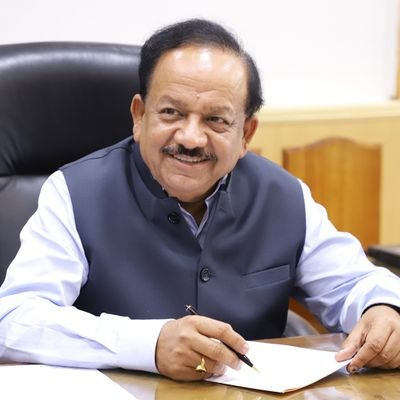
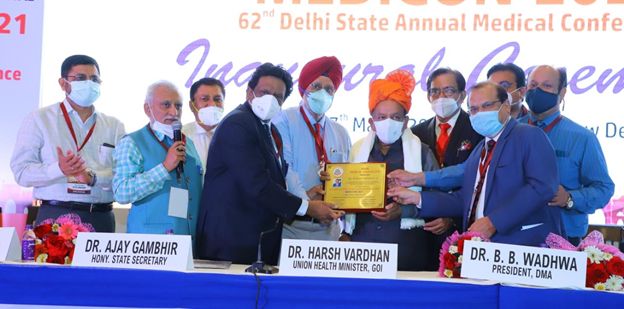
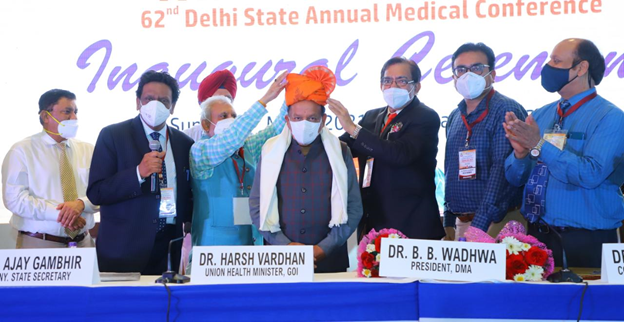
On the occasion of DMA’s 62 Annual Delhi State Medical Conference (MEDICON 2021) , Delhi Medical Association (DMA) honored the Union Health and Family Welfare Minister Dr. Harsh Vardhan for Outstanding Service & Exemplary Work during COVID-19 Pandemic.
“It is a proud privilege and honour for me to be present here at MEDICON 2021 and receiving this award. I have several cherished memories of my time in the prestigious Delhi Medical Association (DMA), which has a rich history of some of the most esteemed medical professionals, not only in India but anywhere in the world.” said Dr. Harsh Vardhan
“COVID-19 Pandemic gave us the opportunity that all of us come together and put India before ourselves. Healthcare Workers (HCWs) & Frontline Workers, not just in this room, but across India, rose to the occasion and sacrificed not only their time with family, but also their own mental, physical and emotional health for this beloved nation. I want to thank you, your colleagues, your friends & family, and everyone else who gave you the strength and encouragement to serve our motherland during the time it needed us the most.” he added
.

The number of medical seats in going to increase by 1,235 over the next two years, announced the Finance Minister of Madhya Pradesh in Budget 2021. Also, the number of government medical colleges in the state is going to increase to 23, a media report said.
Announcements have also been made in the budget to spend a total of Rs. 300 crores for the construction of nine new medical colleges. Currently, six medical colleges are being constructed and the construction process of medical colleges in Damoh, Seoni and Chhattarpur would start soon.
As per the latest media report, during the budget, the Finance Minister has cited a provision of Rs. 15,622 crores for health and related areas.
The report added that the Budget also includes a proposal of setting up two cancer institutes in the state with the budget of Rs. 40 crores.
Provisions have also been made for improving diagnostic services in oncology via PPP mode. The medical education department plans to launch PPP-mode services in Bhopal, Indore and Rewa for early diagnosis of Cancer.
In view of the increasing cases of daily Covid cases, the Union Health Secretary Shri Rajesh Bhushan and Dr. Vinod K. Paul, Member of NITI Aayog held a meeting today with the MDs (NHM) and Health Secretaries of 8 states to review the ongoing Public health measures of surveillance, containment and management of high active caseload reported in these states/UTs.
According to a report from PIB it was pointed out that 9 districts in Delhi, 15 in Haryana, 10 in Andhra Pradesh, 10 in Odisha, 9 in Himachal Pradesh, 7 in Uttarakhand, 2 in Goa, 1 in Chandigarh continue to be of concern as these districts are seeing a decrease in total tests being conducted, low share of RT-PCR tests, increase in weekly positivity and low number of contact tracing of the COVID positive cases.
States were specifically asked to:
- Continue with the effective strategy of ‘Test Track & Treat’ that had yielded rich dividends at the height of the pandemic.
- Improve overall testing in districts reporting reduction in testing
- Increase share of RT-PCR tests in districts dependent on high levels of antigen testing.
- Refocus on surveillance and stringent containment of those areas in selected districts which are seeing cluster of cases.
- Carry out an average close contact tracing of minimum of 20 persons per positive case.
- Focus on clinical management in districts reporting higher deaths.
- Actuate their health infrastructure to provide effective clinical management to all the patients as a surge in cases also affects the case fatality rate in those districts.
- Accelerate vaccination for priority population groups in districts reporting higher cases.
- Make optimal use of the available vaccine doses and focus on critical districts.
- To collaborate with the private hospitals to open up vaccination time-table for a minimum of 15 days and maximum of 28 days at a time.
- Promote COVID-appropriate behaviour through communication and enforcement.
The Union Health and Family Welfare Minister Dr. Harsh Vardhan and Dr. Balram Bhargava , Director General , ICMR inaugurated the new research building ‘Desikan Bhawan’ which is equipped with new COVID-19 diagnostic facility at ICMR-NJIL & OMD in Agra.
The ‘Desikan Bhawan’ is dedicated for research facilities like animal experimentation ,COVID-19 diagnosis , whole genome sequencing of different Mycobacterium species and phytochemical extraction from medicinal plants for anti-TB drug development .The capacity of COVID-19 Diagnostic Laboratory is around 1200 samples per day. This COVID diagnostic lab is loaded with Biosafety level 2(BSL2)cabinets, automated RNA extractors, and Real Time PCR machines with which the diagnostic results can be exported within a day.
The Central Government has rushed high level multi – disciplinary public health teams to Maharashtra and Punjab in view of the increase in number of daily new COVID-19 cases. They will be assisting the State Health Departments in surveillance , control and containment measures.
According to the statement released by the Union Ministry of Health and Family Welfare,“The high level team to Maharashtra will be led by Dr. P Ravindran, Sr. CMO, Disaster Management Cell, MOHFW. While the public health team to Punjab will be led by Dr. S K Singh, Director, National Center for Disease Control (NCDC), New Delhi.”
These teams will visit the States on immediate effect at the hotspot areas in the States and ascertain reasons for the surge.The team will also brief the Chief Secretary / Secretary Health on their observations and remedial measures to control the situation.
“The Union Government has been leading the fight against the Covid pandemic with a ‘Whole of Government’ and ‘Whole of Society’ approach under the umbrella strategy of ‘Cooperative Federalism’. As an ongoing effort to strengthen efforts of various State/UT Governments for COVID management, the Central Government has been deputing Central teams from time to time to visit various States/UTs. These teams interact with the State/UT authorities and get a first-hand understanding of the challenges and issues being faced by them so as to strengthen their ongoing activities and remove bottlenecks, if any. The reports of Central Teams are shared with the states for further follow up action.” Says the statement released by the Union Health Ministry

The GST Authority for Advance Rulings (AAR) Karnataka Bench has recently passed an order saying hand sanitizers are not medicaments and hence are subjected to GST Levy of 18%.
In June last year, Wipro, a manufacturer of products like soaps, toiletries and bulbs, approached AAR to categorize sanitizers and hence classify the specific GST rate.
It said that the product which contained 95% ethyl alcohol and had obtained a drug license should be classified under chapter heading 3004. However, the bench held in its recent order that hand sanitizers cannot be called therapeutic agent as they do not treat a disease already prevalent in a patient. Secondly, it cannot be considered as prophylactic goods either as it is not specific to any disease but it is an alternative to soap. Further, it can not be compared to polio drops or Covaxin, thus it is subjected to 18% GST.
According to a data released by the Health Ministry, 5 states have reported a cumulative of 82% Covid cases in the last 24 hours. On the other hand, nearly 15 Lakh doses have been administered in this time.
A total of 18,327 new cases were registered in the last 24 hours from Maharashtra, Kerala, Punjab, Karnataka and Tamil Nadu. Maharashtra has reported the highest daily new cases at 10,216. It is followed by Kerala with 2,776 while Punjab reported 808 new cases.
India’s present active caseload now stands at 1.61% of India’s total Positive Cases. 108 deaths were reported in the last 24 hours. Six States account for 85.2%of the new deaths. Maharashtra saw the maximum casualties (53). Kerala follows with 16 daily deaths and Punjab reported11 deaths in the last 24 hours.
As on Day-49 of the vaccination drive (5th March, 2021), total 14,92,201 vaccine doses were given. Out of which, 11,99,848 beneficiaries were vaccinated across 18,333 sessions for 1st dose (HCWs and FLWs) and 2,92,353 HCWs and FLWs received 2nd dose of vaccine.
More than 1.94 cr (1,94,97,704) vaccine doses have been administered through 3,57,478 sessions, as per the provisional report till 7 am today. These include 69,15,661 HCWs (1st dose), 33,56,830 HCWs (2nd dose), 63,55,989 FLWs (1st dose) and 1,44,191 FLWs (2nd Dose), 3,46,758 beneficiaries aged more than 45 years with specific co-morbidities (1st Dose) and 23,78,275 beneficiaries aged more than 60 years.
Kaloji Narayana University of Health Sciences of Warangal has started registration for candidates appearing for the Post Doctoral Fellowship Examinations to be held from 05.05.2021, a recent notification from the university informed.
The Clinical/Practical examination will be conducted after theory examination. The clinical/Practical assessment consists of examination of given cases or practicals and presentation to the examiners on which Viva-Voice will be held. The assessment will be conducted at the respective institutions. One Internal Examiner and one External Examiner shall be appointed by the University to conduct the Clinical/Practical examination.