The Zydus Infrastructure bags awards for Best overall performer among Private SEZs , the company makes announcement by a tweet.
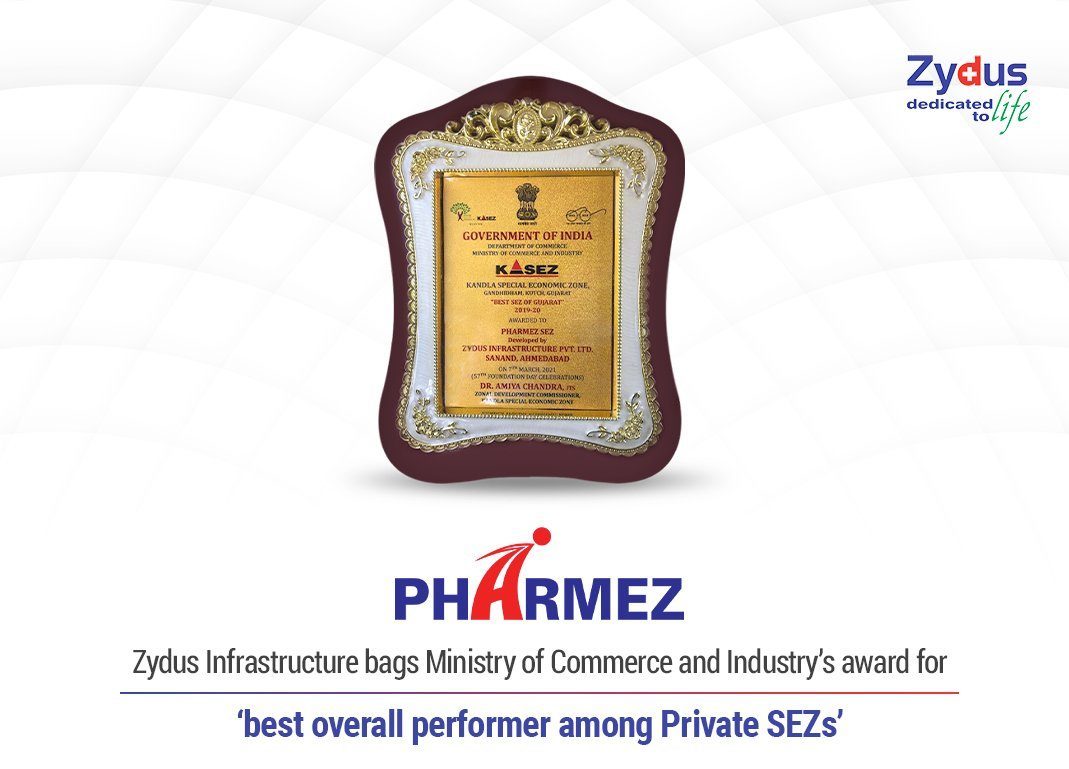



The Zydus Infrastructure bags awards for Best overall performer among Private SEZs , the company makes announcement by a tweet.
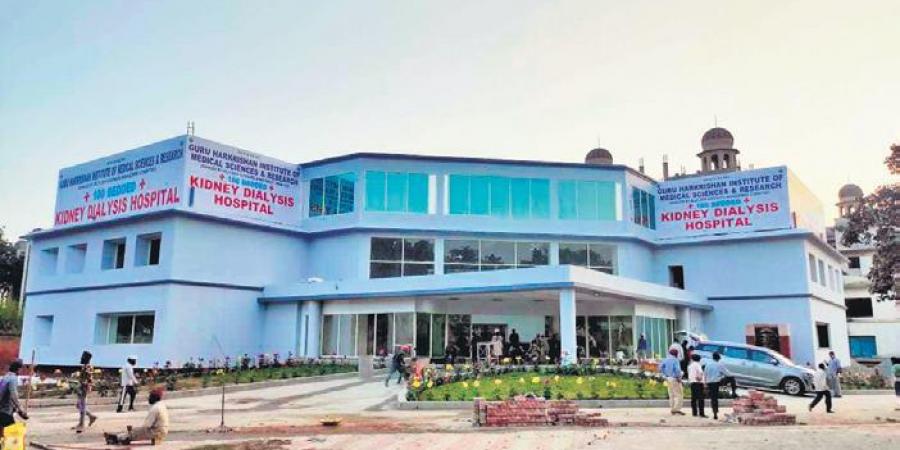
New Delhi – The Delhi Sikh Gurudwara Management Committee or DSGMC , has set up the 100-bedded kidney dialysis centre, Guru Harkrishan Institute of Medical Sciences at Delhi’s Bala Saheb Gurudwara. The Delhi Sikh Institute of Medical Sciences at Delhi’s Bala Saheb gurudwara , promises to expand it to 1,000 bedded by the end of this year.
The hospitals team of 90 para medics and 24 doctors working around the clock, the hospital will have all minimum formalities. According to the doctors the hospital can give dialysis to 500 patients on daily basis. The facility is walk-in for patients and they can come directly without any formalities for dialysis.

In a recent post, Delhi ONGC has Announced a Job -Notification for the Fresh job recruitment for the post of Medical Officer on contract basis or regular basis. Still Those Job Seeker or Candidates who are waiting or interested in the jobs vacancy than they can read full details & apply this job online with all certify all documents.
| No. of vacancies | 17 |
| Job Location | New Delhi, Delhi |
| Age Limit | 37 years |
| Educational Qualification | MD, MBBS, MS(Radiology) |
| Method of Application | Online |
| Selection Process | Written Exam, Interview |
| Pay Scale | 45000 to 60000/- |
| Application Fee | General, OBC & EWS: Rs.300/ Other including Departmental: Rs.100/- |
| Starting Date | 30 June 2021 |
| Last Date | 26 July 2021 |
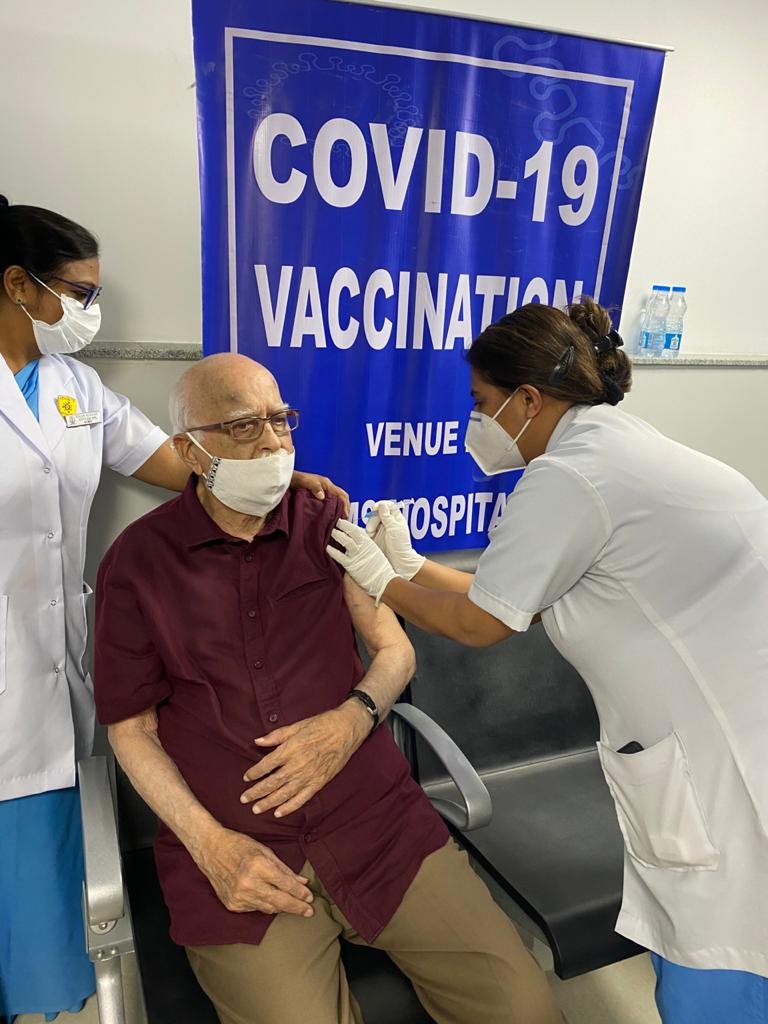
Senior BJP leader LK Advani took his first dose of the #COVID-19 vaccine at AIIMS Delhi today.

Lucknow: A senior doctor, a director of a medical colleges and 2 of his accomplices have been arrested for a scam of Rs. 15 crores on the pretext of securing MBBS admission of at least 26 lakh aspirants.
According to a media report, the Uttar Pradesh-based senior doctor conspired with two techies and allegedly hacked into the NEET database to secure the list of unsuccessful medical aspirants. The doctor approached the aspirants and promised them MBBS seats for a monetary price. He started blackmailing them when he failed to fulfil the promise and the victims started asking for refund.
It was revealed in the raids conducted by the Special Task Force (STF) Officials that the scam network was spread across Delhi, UP, Bihar, West Bengal, Andhra Pradesh, Maharashtra and Madhya Pradesh. During the raid, the officials secured an SUV, 30 mobile phone, 25 registers with details of money transactions, and documents related to admission in the MBBS/MD courses.
SSP, STF, Anil Singh Sisodiya informed that the whole scam came into light after the complaint of a Patna resident who was duped of Rs. 6 lakhs by one of the accused.
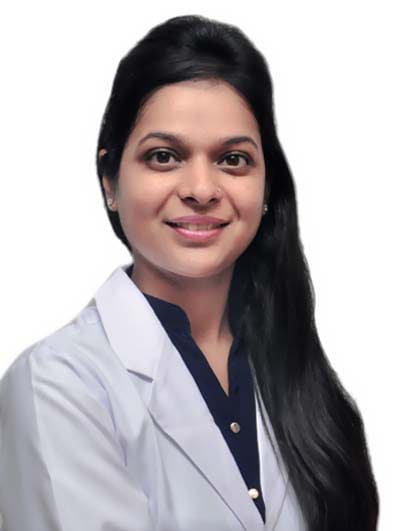
By Dr Shikha Gupta
As we celebrate the World Glaucoma Week from 7th to 13th March this year, it’s a good time to schedule an appointment for a comprehensive dilated eye exam, if you haven’t undergone that even once. It is imperative that we make it a part of our annual to do lists. Just like we get annual blood and other test for certain disorders, just like we get our cars or
air conditioners serviced every year, this needs to be reminded that an annual examination for intra-ocular pressure is just as necessary. The World Health Organization estimates that 4.5million people worldwide are blind due to glaucoma. In India, glaucoma is the leading cause
of irreversible blindness with at-least 12 million people affected and nearly 1.2 million people blind from the disease. What is more alarming is that more than 90 percent cases of glaucoma remain undiagnosed in the community. This is especially important as in its early stages, glaucoma typically has no symptoms. Late in the disease, once vision has been lost, it can’t be restored. Being an asymptomatic disease, it leads to peripheral visual field loss first with well-maintained central vision. Hence it is also called a silent thief for vision loss. As much as 40% of vision may be lost before a person notices. However, without adequate treatment, glaucoma eventually affects central vision and progresses to complete blindness. Therefore, early detection by having a comprehensive dilated eye exam is the key to protecting vision. Those over 40 years of age, with a family history of glaucoma, high myopia (nearsightedness), those with history of steroid use, those with connective tissue disorders and those with thin central corneal thickness are especially at higher risk for development of glaucoma. These people at higher risk should undergo comprehensive dilated eye exam at least every one year. Glaucoma is a group of diseases that damages the optic nerve, the bundle of nerve cells that relays visual information from the eye to the brain. In the most common form of glaucoma, called primary open angle glaucoma, nerve damage results from increased pressure inside the eye. Increased eye pressure occurs when the fluid that circulates in the eye drains too slowly, and causes consequent optic nerve damage. The other common form of glaucoma called the
angle-closure glaucoma, may require a laser iridotomy procedure to help lower your intraocular pressure. When optic nerve damage has occurred despite a normal IOP, this is called normal tension glaucoma. Secondary glaucoma refers to any case in which another disease causes or contributes to increased eye pressure, resulting in optic nerve damage and vision loss.
However, if detected early, pressure often can be controlled through medication or surgery, and the progression of the disease can be halted. It is important to know that since the lost vision is irreplaceable, damage caused is irreversible, there is no gain in vision after therapy is instituted. However, the goal of the treatment is to prevent further loss. If you have been diagnosed with glaucoma, there are certain do’s and don’t’s for you:
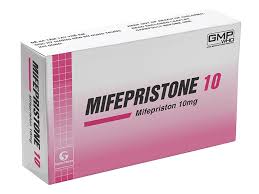
The Subject Expert Committee under the CDSCO (Central Drug Standard Organization) has directed the Akums Drugs and Pharmaceuticals to revise the phase 3 clinical trial protocol for abortion drug Mifepristone Tablets 10/25mg.
In the 58th SEC meeting held on 25.02.2021 firm presented Phase 3 Clinical Trial protocol for Mifepristone Tablets 10/25mg.
The drug Mifepristone is a steroidal anti-progestin drug that is used to induce abortion and functions as a competitive progesterone receptor antagonist in the presence of progesterone. It causes the pregnancy to end by blocking the hormone progesterone, which is to keep the pregnancy going.
Moving to the launch of the said drug the clinical trial and the Bioequivalence Study waiver was presented by Akums Drugs and Pharmaceuticals for granting permission to manufacture Mifepristone Tablet 10mg & 25mg at the 50th Subject Expert Committee meeting held last year. Responding to this the committee recommended that the firm should conduct a clinical trial to examine the efficacy and safety of the drug in the proposed indication and said that the firm submit the clinical trial protocol for further review.
Committee reviewed the clinical trial protocol in its recent meeting and after a detailed deliberation, the committee recommended the firm to revise the clinical trial protocol according to below conditions:
The committee added that the firm should submit the revised protocol before the committee for further consideration.
DCI (Dental Council of India) has issued a notice to the Principals of all Dental Colleges of India to submit a certificate issued by the National Assessment and Accreditation Council (NAAC) as soon as possible and directed them to act quickly.
DCI is the apex body to monitor dental education in the country, but unlike all other higher education regulatory bodies, it does not have an independent body of its own for accreditation of dental colleges. A NAAC Accreditation certificate is a step towards improving the standard of dental education as per international norms. NAAC tag has been made mandatory for medical and para-medical colleges as well.
A NAAC grade gives students and patients a broad idea of the comparative standards of the institutions in the country.
https://www.dciindia.gov.in/Admin/NewsArchives/L.NO.6385.pdf

A Surat-based MBBS foreign graduate approached the Gujarat High Court via Advocate Aftab Ansari after being unable to start medical practice. The medico had completed his graduation abroad and cleared the FMGE exam that would make his degree valid in India.
However, the medico had to face problems due to a discrepancy related to his date of birth that is documented as 23.08.1996, whereas his original date of birth is 23.11.1996. as a result, his recognition had been put on hold.
Meanwhile, the medico’s lawyer Mr. Ansari told a daily, “the court issued notices to the medical college where he studied, the District Education Officer of Surat and the GSHSEB after hearing our petition.”

In India, about 28% of total MBBS seats cost over 10 Lakhs -per-annum effectively preserving them for the rich, a larger section than the reserved category.
In a detailed analysis of fees for the MBBS course in the over 530 MBBS colleges, it came out that about half of the seats in private colleges, excluding deemed universities, are in the management quota or NRI quota. In the NRI quota, the average annual tuition fee is roughly Rs. 25 lakh per annum, while for the management quota, it is around Rs. 11 lakh per annum.
Even some government colleges, mostly in Gujarat (11 colleges) and Rajasthan (8 colleges) have management seats (1,350) and NRI seats (580) at an average Rs. 18.5 lakh. In Punjab, the cost of MBBS in government colleges went up from Rs. 4.4 lakh to Rs. 7.8 lakh, among the highest in the country.