


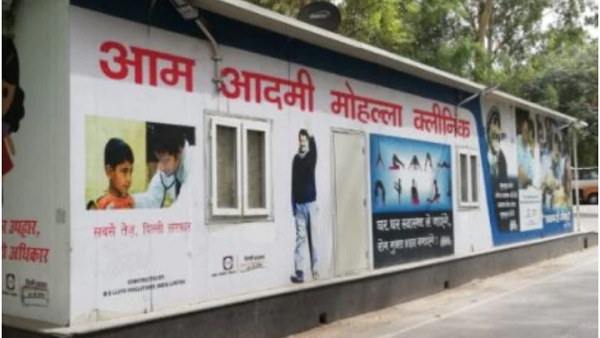
The future of Delhi’s Mohalla Clinics and the potential adoption of the Ayushman Bharat Jan Arogya Yojana in the Capital will be determined by the new state government, according to the Union health ministry. This decision holds significant implications for Delhi’s healthcare infrastructure, particularly in terms of primary healthcare delivery.
Mohalla Clinics: A Key Component of Delhi’s Healthcare System
Mohalla Clinics, an initiative launched by the Aam Aadmi Party (AAP) government, have played a pivotal role in providing accessible and affordable healthcare services to underserved communities in Delhi. These clinics offer free consultations, medicines, and diagnostic tests to millions of residents, particularly those who struggle to afford private healthcare.
Currently, there are around 300 Mohalla Clinics operational across the city, with plans to expand to 1,000 in the coming years. These facilities provide over 200 diagnostic tests and 110 essential medicines at no cost, making primary healthcare services accessible to the masses.
However, with the change in government, the future of these clinics remains uncertain. Dr. Atul Goel, Director-General of Health Services, stated that primary healthcare remains a priority, but the new government will decide whether to continue the Mohalla Clinic model in its existing form or modify it.
Role of the Central Government in Primary Healthcare
Union Health Secretary Punya Salila Srivastava highlighted that the central government already runs Urban Health and Wellness Centres under the National Health Mission (NHM). These centres could potentially be expanded to provide similar services as Mohalla Clinics. However, the decision on whether to merge the two models or continue with both independently will be taken by the new Delhi government.
The discussion on healthcare policies took center stage at a recent press briefing attended by Union Ministers of State for Health Prataprao Jadhav and Anupriya Patel. They emphasized the growing importance of primary healthcare and the necessity of adapting healthcare models to serve urban populations effectively.
Funding and Budget Allocations for Healthcare
The Narendra Modi-led government has significantly increased its healthcare budget over the past decade. Since 2014-15, there has been a 160% rise in health allocation, growing from ₹36,948 crore to nearly ₹96,000 crore in the current fiscal year.
More than 55% of this budget is allocated to centrally sponsored healthcare schemes, indicating a strong commitment to strengthening India’s healthcare system. The current healthcare expenditure stands at 1.9% of the GDP, with the goal of reaching 2.9% as outlined in the National Health Policy 2017.
Ayushman Bharat: Will Delhi Implement the Scheme?
One of the key debates surrounding Delhi’s healthcare policy is the potential adoption of the Ayushman Bharat Jan Arogya Yojana. While the scheme provides health coverage of up to ₹5 lakh per family for secondary and tertiary care hospitalization, Delhi has not fully implemented it yet.
The new government will have to decide whether to integrate Ayushman Bharat with the existing Mohalla Clinic model or adopt it as a standalone initiative. Critics argue that Ayushman Bharat primarily benefits private hospitals, whereas Mohalla Clinics focus on strengthening public healthcare infrastructure at the grassroots level.
Implications for Delhi’s Healthcare Future
The decision on Mohalla Clinics and Ayushman Bharat will shape Delhi’s healthcare landscape for years to come.
- If Mohalla Clinics continue: The city will retain a decentralized, accessible, and cost-effective primary healthcare model focused on urban populations.
- If Ayushman Bharat is adopted: Delhi’s residents will gain access to a nationwide healthcare insurance scheme, ensuring coverage for costly hospital treatments.
- If both models merge: A hybrid healthcare system could emerge, combining public primary care with insurance-backed secondary and tertiary care.
As Delhi’s new government takes office, one of its most crucial decisions will be shaping its healthcare strategy. Will it prioritize grassroots primary healthcare or opt for an insurance-driven model? The answer will determine the accessibility, affordability, and efficiency of healthcare for millions of Delhiites in the years to come.
With healthcare remaining a core concern for urban India, all eyes are on how the new administration balances these models to serve the public best. Only time will tell whether the Mohalla Clinics continue to operate as they do now, evolve under a new framework, or get replaced by an alternative system.