A nurse, two lab technicians and a pharmacy store owner arrested for black marketing of Remdesivir injections in Shahdol. ASP Mukesh Vaish said, “Six injections, mobile phones and over Rs 6 lakhs cash recovered from their possession. A case is registered and strict action will be taken.”

Uncategorized
Dr Reddy’s enters into contract with Eli Lilly to produce Baricitinib
Dr Reddy’s Laboratories has entered into an agreement with Eli Lilly and Company for the manufacture and commercialization of Baricitinib in India, the Hyderabad-based pharma company said on Tuesday.
Baricitinib is to be used in the treatment of suspected or laboratory-confirmed Covid-19 infections in hospitalised adults requiring supplemental oxygen, invasive mechanical ventilation, or extracorporeal membrane oxygenation (ECMO).
The drug has received restricted emergency use approval from the Central Drugs Standard Control Organisation (CDSCO) for use in combination with Remdesivir.
Dr Reddy’s said, “This partnership comes at a critical juncture in the fight against the pandemic in India, and adds to the company’s existing range of Covid-19 therapeutics covering the full spectrum from mild to moderate and severe conditions of the disease, and a vaccine.”
“From the start, we have been determined to explore every possible avenue against Covid-19. Our collaboration with Lilly will help us make yet another treatment option available to patients in India,” the firm’s CEO (API and Services) Deepak Sapra said.
Eli Lilly and Company had on 10 May announced voluntary licensing agreements with Sun Pharma, Cipla and Lupin to expedite the availability of Baricitinib for treatment of Covid-19 patients in India.
Following Goa government’s prescription of ivermectin to all persons above 18 years of age as a prophylactic treatment of covid-19, the World Health Organization (WHO) waved out a caution flag against the drug.
“Safety and efficacy are important when using any drug for a new indication. @WHO recommends against the use of ivermectin for #COVID19 except within clinical trials,” Soumya Swaminathan, Chief Scientist at WHO tweeted.
Use of Ivermectin, a broad-spectrum anti-parasitic agent, included in WHO essential medicines list for several parasitic diseases has already fuelled debate over its efficacy in the management of covid-19. Ivermectin is used in the treatment of onchocerciasis (river blindness), strongyloidiasis and other diseases caused by soil-transmitted helminthiasis. It is also used to treat scabies.
The WHO earlier in March had said that the current evidence on the use of ivermectin to treat covid-19 patients is inconclusive. Until more data is available, WHO recommended that the drug only be used within clinical trials. The U.S. Food and Drug Administration (FDA) has also recommended it not be used for covid-19.Even as the WHO has been cautioning against the drug, the union health ministry in its revised guidelines on home isolation has recommended Ivermectin in cases of mild or asymptomatic infection, in case of a fever not settling with paracetamol. “Consider Tab Ivermectin (200 mcg/kg once a day, to be taken empty stomach) for 3 to 5 days”, the revised guidelines of the union health ministry state.
Merck, an Ivermectin manufacturer in the US, also in February came out with a statement on the use of drug during the pandemic saying that Company scientists continue to carefully examine the findings of all available and emerging studies of ivermectin for the treatment of covid-19 for evidence of efficacy and safety. “It is important to note that, to-date, our analysis has identified–no scientific basis for a potential therapeutic effect against covid-19 from pre-clinical studies; no meaningful evidence for clinical activity or clinical efficacy in patients with COVID-19 disease, and; a concerning lack of safety data in the majority of studies,” the company said in a statement.
Several public health experts too are against the usage of the drug. “There is apparently no role of Ivermectin in management of covid-19. Both should be removed from all guidelines till robust evidence is generated. Ivermectin maker (Merck) and WHO both have strongly advised against it. It can be individually or universally given for scabies, O. volvulus, strongyloidiasis and filariasis,” said Dr Anoop Misra, chairman, Fortis-C-DOC.
In a stark contrast of the voices against Ivermectin, a latest peer-reviewed research published last week has said that immediate global ivermectin use will end the covid-19 pandemic. Peer reviewed by medical experts that included three U.S. government senior scientists and published in the American Journal of Therapeutics, the research is a comprehensive review of the available data taken from clinical, in vitro, animal, and real-world studies.
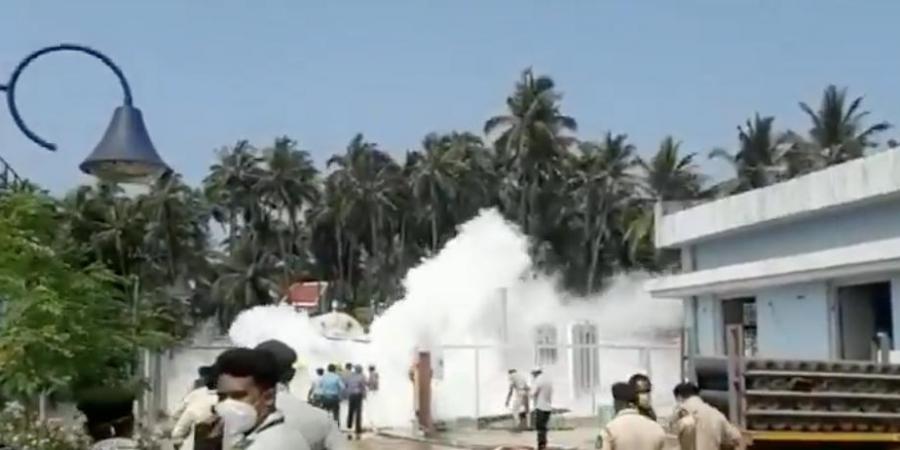
Oxygen leakage was reported at the South Goa District Hospital. The hospital has COVID-19 patients. Fire tenders have been rushed to the spot. No casualties have been reported and the leakage was plugged within a short span of time.
“I am not aware of technical glitches but somehow, some bolt had come up, but it is now under control. Nothing to worry about at all,” South Goa collector Ruchika Katyal told news agency ANI.
“A minor oxygen leakage occurred at the South Goa district hospital (SGDH) in Margao on Tuesday afternoon when the gas was being filled in the main storage tank on the
campus from a tanker, but there is no casualty,” a police official was quoted as saying by news agency PTI.
According to reports, the medical oxygen leaked when the gas was being transferred to the main tank of the hospital from a tanker. “The leakage was plugged within a few minutes,” he said.
The South Goa district hospital is one of the biggest COVID-19 facilities in Goa. The district officials visited the incident site and said that a report will be submitted to the state government.
On Monday, Goa reported 2,804 new cases of coronavirus which took the overall tally of the state to 1,21,650. On Monday, Goa also okayed the use of Ivermectin to treat COVID-19 infection. 87,659 COVID-19 patients have been discharged from hospitals, while 1,729 have lost their lives due to the deadly disease.
The United States’ drug regulator on Monday expanded the emergency authorisation given to the Pfizer Covid vaccine for use in children as young as 12.
This is the first vaccine to be authorised by the Food and Drug Administration for use in this age group in the United States. Until now, the vaccine was being administered to people aged 16 and above.
President Joe Biden called it a “promising development” in the fight against the virus, which has affected over 3.27 crore and killed 5.82 lakh in the country, reported AFP.
“Having a vaccine authorised for a younger population is a critical step in continuing to lessen the immense public health burden caused by the COVID-19 pandemic,” said Peter Marks, director of the Food and Drug Administration’s Center for Biologics Evaluation and Research.
The Pfizer vaccine will be administered as a series of two doses, three weeks apart, the same dosage and dosing regimen for 16 years of age and older.
However, the vaccine will not be available for use in children immediately. An advisory committee of the Centers for Disease Control and Prevention will meet first to review the data and make recommendations for the vaccine’s use in the 12-15 age group, according to The New York Times.
Pfizer’s clinical trials have shown that these children may safely receive the dose already available for adults. The company had enrolled 2,260 participants ages 12 through 15 years and gave them either two doses of the vaccine or a placebo three weeks apart.
As India is in the grasp of a devastating second wave of Covid-19, World Health Organization (WHO) Chief Scientist Soumya Swaminathan on Monday (local time) termed the rate of infections and deaths in the country as “worrying” and called on governments to boost exercise on reporting actual numbers.
In an exclusive interview with ANI, Swaminathan said that the projections of one million deaths by August projected by the Institute for Health Metrics and Evaluation (IHME) are based on models and available data, which are not predictions of the future and can be changed.
“I would say that at this point of time, the situation is very worrying, the daily number of cases and deaths that we are seeing today in India and other countries in the Southeast area region is a big concern for us and we also realise that these are underestimates.
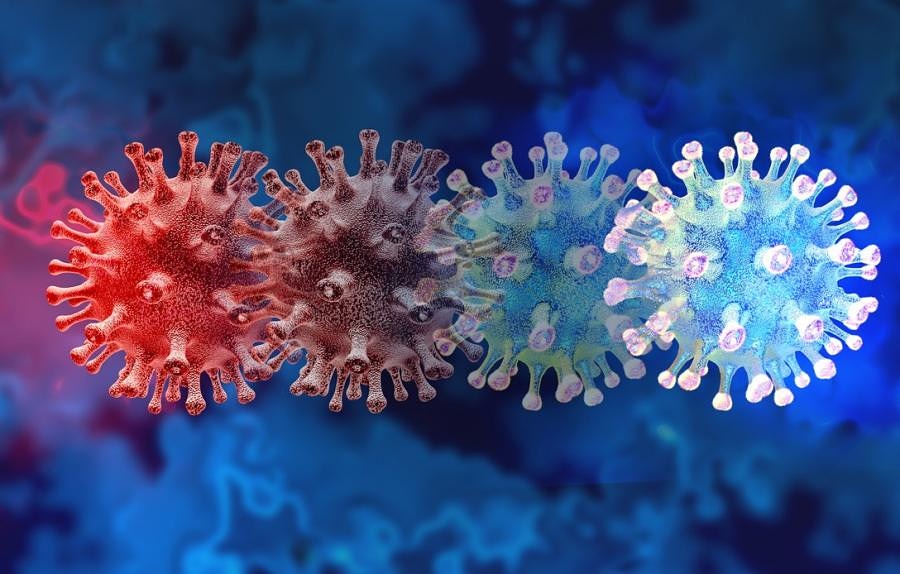
The WHO on Monday said that the coronavirus variant first identified in India last year was being classified as a variant of global concern, with some preliminary studies showing that it spreads more easily.
“We are classifying this as a variant of concern at a global level,” Maria Van Kerkhove, WHO technical lead on Covid-19, told a briefing.
The B.1.617 variant is the fourth variant to be designated as being of “global concern” and requiring heightened tracking and analysis and data collection must be done in a transparent way, the Chief Scientist added.
“It should be done and we should be aware because the better the data, the better the policies can be directed towards what is happening. Let’s remember, people are not just dying of COVID, people are not also dying of other illnesses for which they are not able to access healthcare,” Dr Swaminathan asserted.
Indian coronavirus infections and deaths held close to record daily highs on Monday, increasing calls for the Indian government to lock down the world’s second-most populous country.
Indian coronavirus infections and deaths held close to record daily highs on Monday, increasing calls for the Indian government to lock down on the world’s second-most populous country.
Soumya Swaminathan said studies were underway in India to examine the variant’s transmissibility, the severity of the disease it causes and the response of antibodies in people who have been vaccinated. The WHO scientist called for more genome sequencing in India to get a full picture of what is going on in different parts of the country, while saying that it should be hand-in-hand with clinical epidemiological studies.
“Sequencing does not give you the full picture. You do not know whether it is more transmissible, whether it causes more severe diseases or what impact it has on your diagnostics,” she said.
While replying to a query on travel amid the pandemic, Swaminathan said that the Review Committee on International Health Regulation (IHR) has said that vaccine passports should not be a pre-condition for travel.
“The scientific reason is that just because you are vaccinated does not mean you cannot get infected. You can see infection or you could be asymptomatic but when you travel you may infect others. The ethical argument is that not everyone has access to vaccinations now,” she said, while advocating safe travel with precautions.
She also said that the double mutant – B.1.617 – is highly transmissible and a WHO committee has classified it as a ‘variant of concern’.
“For now, the message is that it will be more transmissible, but it behaves the same way as other viral strains replicate the same proportions. Vaccines are still very effective against every variant in the world in protecting against severe disease and hospitalisations,” she informed.
Swaminathan also called on countries to continuously update policies regarding the pandemic, which should also be based on science and data. “We have to continue to adapt our policies. We cannot become stagnant. What is needed first is to call strong leadership which is based on science and data at public health principles. That needs to be updated from time to time even if you take treatment, Swaminathan added. The WHO scientist also urged data transparency in different countries and that people should be explained why certain decisions are being made and the rationale behind them.
Earlier today, WHO director-general Tedros Adhanom Ghebreyesus said that the WHO Foundation was launching a “Together for India” appeal to raise funds to purchase oxygen, medicines and protective equipment for health workers.
India is currently battling a deadly second wave of the Covid-19 pandemic, which is believed to being led by the ‘double mutant’. The current wave has strained the country’s health infrastructure and overburdened frontline medical workers.
All India Institute of Medical Sciences (AIIMS), Gorakhpur has invited applications from eligible candidates for the posts of professor, additional professor, associate professor, and assistant professor in various Departments.
| Post | Professor: 30; Additional professor: 22; Associate professor: 29; Assistant professor: 46 |
| Age limit (as on closing date of application) | Professor, Additional professor: 58; Associate professor, Assistant professor: 50; |
To view the official advertisement, click here.
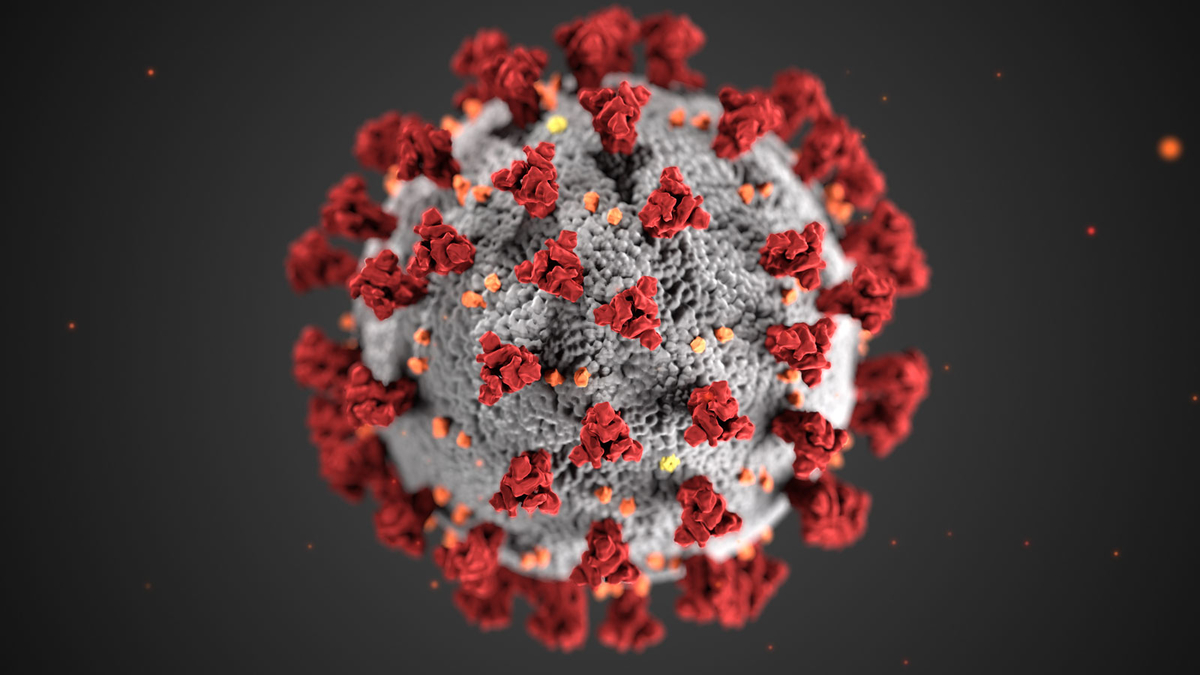
A Covid-19 variant spreading in India, the B.1.617, appears to be more contagious and has been classified as being “of concern”, the World Health Organization said Monday.
“There is some available information to suggest increased transmissibility,” and also possibly some increased resistance to vaccine protections, Maria Van Kerkove, WHO’s lead on Covid-19, told reporters. “As such, we are classifying this as a variant of concern at the global level,” she added.
Vivimed Labs gets DGHS nod to manufacture, market Favipiravir tablets in India
Drug firm Vivimed Labs on Monday said it has received approval form the Director General of Health Services (DGHS) to manufacture and market Favipiravir tablets in India, used for the treatment of mild to moderate cases of Covid-19. Vivimed Labs in receipt of Government of India (DGHS) approval to manufacture and market Favipiravir tablets in the strengths of 200 mg and 400 mg under Vivimed’s own brand name ‘Favulous’ across India, the company said in a regulatory filing. It is used for the treatment of mild to moderate cases of Covid-19.
Ramesh Krishnamurthy, CEO of Vivimed Labs said, “With huge spike in Covid-19 cases being reported daily in India, there is an urgent need to provide more treatment options to healthcare professionals.”
“We are launching Favulous at a competitive price to make the drug accessible to more and more patients thereby ensuring good health and reducing their financial burden. This is in line with Vivimed’s commitment to be at forefront in India’s fight against Covid-19.”
In a recent notice, JIPMER has announced the postponement of entrance examination for July 2021 session of PDCC and PDF courses which was scheduled on 20.05.2021.
The exam will now be held on 02.07.2021. The candidates who complete the MD/MS/DM/MCh courses on or before 31.07.2021 can also apply for the PDCC/PDF courses for July 2021 session.
To view the official notice, click here.