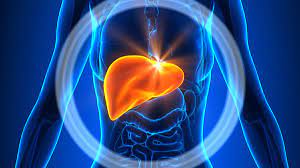
In a recent trial, researchers discovered that combining the immunotherapy medication nivolumab with the kinase-inhibitor drug cabozantinib can allow certain liver cancer patients who would otherwise be deemed surgical candidates to have curative surgery.
Results published in the journal Nature Cancer by researchers at the Johns Hopkins Kimmel Cancer Center described the benefits of this drug combination.
Among 15 people with hepatocellular carcinoma (HCC) in the study who could not be treated previously with surgery, the drugs allowed 12 patients to undergo successful surgical removal of their cancer. Five of these patients had only 10% or less of their tumour remaining after the drug treatment.
The combination therapy offers a much-needed treatment for HCC, which makes up more than 90% of all primary lover cancers and is the fourth leading cause of cancer-related death worldwide. Fewer than 30% of HCC cases globally cam be surgically resected at the time of diagnosis, either because the liver is too damaged or cancer has spread into tissues that make surgery too difficult.
“The patients who are enrolled in this study are typically just thought of as incurable in the current conventional sense, so the fact that we saw these responses was really exciting because this suggests this strategy could be adopted for very challenging incurable diseases,” says Won Jin Ho, M.D., assistant professor of oncology at the Johns Jopkins University School of Medicine an first author of the study.
Uncategorized
Failure to diagnose a neck femur fracture: the Supreme Court orders St Stephens Hospital to pay Rs 5 lakh in compensation
New Delhi: Observing that a ‘failure in diagnosis of fracture neck femure resulted in an unfavourable outcome’ for a patient, the National Consumer Disputes Redressal Commission has ordered the Delhi-based St Stephen’s hospital to pay Rs 5 lakh compensation, following an earlier District Commission order on the matter.
Setting aside the state commission’s decision to reduce the amount of compression, the top consumer court noted that the complainant had to undergo surgery twice after the operation at the treating hospital, which failed to permanently cure his physical condition.
“Considering the loss of earning capacity and future prospects, in our view, the compensation of Rs. 5.0 lac is just and fair,” noted R.K Agarwal, President of NCDRC, and S.M. Kantikar.
The case concerned the patient who had suffered a road accident back in 2003 and sustained bodily injuries thereafter. After getting first-aid at a Government hospital, the patient was referred to the hospital where the treating doctor examined him and diagnosed him having a fraction of femure on the right side.
Following this, the patient had undergone surgery and a rod was implemented from his loin to the thigh. During the follow-up treatment, a second doctor at the treating hospital examined the patient again and assured that it would take some more time for everything to get cured.
However, as the pain didn’t get reduced in May 2004, the complaint contracted another doctor who opined that there was a fracture of loin bone, and advise the patient to approach the same hospital where he was Where he was first operated on.
Meanwhile the family doctor of the complaint examined all the X rays of the patient and opined that the fracture had occurred during the first operation in the Operation Theatre of the treating hospital when the patient again approached the hospital, he was advised for bone grafting as there was an unsatisfactory union of bones, for which the complainant didn’t agree.
Again the complainant came back to the hospital with the complaint of pain in the right hip and thigh. The X-ray revealed displaced intra-capsular fracture of neck femur and he was advised to undergo osteosynthesis – a valgus osteotomy and fixation with angle blade plate.
Unable to bear the cost of another operation the complainant approached a government hospital for further treatment.
Thereafter alleging medical negligence against the treating hospital, the complainant approached the District Forum and claimed a total amount of rupees 16,97,800/- as compensation. The patient contented that X-ray taken before the operation didn’t show any intra capsular fracture of neck femur. However the X-ray taken after surgery within 24 hours clearly revealed the intra capsular fracture neck femur. Denying that the fracture of the loin bone had occurred during the surgery, the hospital submitted that the complaint was false, misconceived and not maintainable. The hospital further submitted before the district forum that the complaint was initially treated at a government hospital, wherein X-ray showed only fracture of femur shaft.
After hearing the contentions of both the parties, the District Forum party allowed the conplaint and directed the hospital to pay Rs. 5 lac to the complainant along with Rs 5,000 as a cost of litigation.
A nurse has been arrested on Thursday for allegedly thrashing a two-month-old boy in a hospital in Shahdara’s Vivek Vihar, the police said.
The accused has been identified as Somayya (24), according to Deputy Commissioner of Police (Shahdara) R. Sathiyasundaram. During the investigation, it was discovered that she used to become intoxicated on the job. According to authorities, she was possibly inebriated on the night of the event.
The victim’s father — Sabeeb (28) from Uttar Pradesh’s Hathras — told the police that his wife delivered twins in May but one of their sons, Ahaan, fell sick on July 16. He then took Ahaan to a local hospital where the doctors asked him to take the baby to Delhi for better treatment. He then got his son admitted to Care New Born & Child Hospital in Vivek Vihar on July 18, as per a report by The Hindu.
The complainant said he was visiting the hospital daily. But on July 24, he received a call from the hospital that his son got injured.
Mr. Sabeeb immediately reached the hospital and found that Ahsan’s hand was fractured and his face was swollen.
Mr. Sabeeb alleged that the doctor refused to tell him how the incident happened and also threatened him with dire consequences if he approached the police.
The complainant said he managed to watch the CCTV footage of the room where his son was admitted.
In the footage, a nurse can be seen thrashing his son at around 4 a.m. on July 24, he alleged.
Mr. Sabeeb then approached the police on July 27. An FIR was registered under Sections 325 (punishment for voluntarily causing grievous hurt), 506 (criminal intimidation) and 34 (common intention) of the Indian Penal Code and under relevant Sections of Juvenile Justice Act on Wednesday night.
Further investigation is under way, the police added.
Metabolic Syndrome Is Associated With An Increased Risk Of Second Stroke And Death: A Study
According to a meta-analysis, people with larger waistlines, high blood pressure, and other risk factors associated with metabolic syndrome may be more likely to have a second stroke and even die than people who do not have metabolic syndrome.
The study’s findings were published online in Neurology, the medical journal of the American Academy of Neurology.
Excess belly fat plus two or more of the following risk factors was defined as metabolic syndrome: high blood pressure, higher than normal triglycerides (a type of fat found in the blood), high blood sugar, and low high-density lipoprotein (HDL) cholesterol.
“Studies have shown conflicting results on whether metabolic syndrome, which has been linked to an increased risk of a first stroke, also increases the risk of a second stroke and death,” said study author Tian Li, MD, of the Fourth Military Medical University in Xi’an, China.
“Studies have shown conflicting results on whether metabolic syndrome, which has been tied to an increased risk of a first stroke, also increases the risk of a second stroke and death, so we wanted to analyze all of the research available,” said study author Tian Li, MD, of Fourth Military Medical University in Xi’an, China.
“These findings will help people with metabolic syndrome and their health care providers know that they should be screened for risk of recurrent stroke and given preventative treatments,” added Li.
For the risk of stroke recurrence, the meta-analysis combined results from six studies with 11,000 participants who were followed for up to five years. During that time, 1,250 people had a second stroke.
The analysis found that people with metabolic syndrome were 46 per cent more likely to have a second stroke than people who did not have the syndrome.
Looking at each component of metabolic syndrome, researchers found that having a low level of good cholesterol and having two or more components of the syndrome were associated independently with an increased risk of a second stroke.
Having excess belly fat, high blood sugar and high blood pressure were not associated with increased risk of the second stroke on their own.
For the risk of death from any cause, the meta-analysis combined eight studies with 51,613 people who were followed for up to five years. During that time, 4,210 people died.
People with metabolic syndrome were 27 per cent more likely to die during the study than people without the syndrome. None of the individual components of the syndrome was independently associated with an increased risk of death.
“These results add to the evidence that people with metabolic syndrome should take steps to modify their risk of second stroke and even death where possible, through medication, diet, exercise and other recommended lifestyle changes such as stopping smoking,” Li said.
It is a common misconception that storing and maintaining Pfizer needs huge investment: Jesal Doshi, B Medical Systems
A few weeks ago, B Medical Systems, a global player in the vaccine cold chain industry, announced a partnership with Dr. Reddy’s Laboratories for the pan India rollout of Sputnik V vaccines.
B Medical Systems will be offering their vaccine freezers, which can store vaccines at temperatures as low as -25°C. To address the immediate needs, these units were delivered by air freight from Luxembourg.
According to Jesal Doshi, Deputy CEO of B Medical Systems, it is tough to alter people’s minds about vaccine efficacy while kept in an ice box or a local refrigerator. Mr. Doshi claims that various vaccinations require different temperatures and that if they are not provided the appropriate temperatures, they would lose their efficacy.
Mr. Doshi claims that Pfizer is a very effective vaccine with a logistic cost of less than a rupee, and that the Indian government’s failure to get the vaccine into the nation is a source of significant concern.
Here are a few excerpts from the discussion with Mr. Doshi:
You have recently tied up with Dr Reddy’s lab for pan-India rollout of Sputnik V. Tell us more about that? Tell us about the work B Medical has done to help with the rollout of Covid 19 vaccines?
Jesal Doshi: For more than 40 years, B Medical Systems has been the world’s oldest and biggest firm dedicated only to the cold chain of vaccinations providing safe transportation for vaccines, pharmaceuticals and blood. We are a company based in Luxembourg, Europe, and we have been operating there until early this year, when we were invited to start manufacturing in India by Prime Minister Narendra Modi. We built up our own manufacturing plant in India after receiving that invitation in a record-span of four months. This is the first time we’ve manufactured outside of Luxembourg, and I’m quite proud of the fact that we chose India to do so.
Coming to the pact with Dr. Reddy’s, nearly every vaccination is temperature sensitive and may lose its potency if not kept at the proper temperature. Sputnik requires a temperature of -18 degrees Celsius for storage, whereas other vaccinations require a temperature of 2-8 degrees Celsius. Pfizer, on the other hand, requires storage at -60°C or lower, making it difficult to retain these vaccines at a proper temperature under such harsh circumstances, which is where we come in. We ensure that any vaccine, at any temperature under any condition is maintained correctly and hence assuring that the recipient receives the rightly stored and transported vaccine.
There are many areas where the terrain may be hostile, electric supply may be erratic – How do you manage in such areas?
Jesal Doshi: There are two different challenges, one being the terrain and the other one being very peculiar to the nation, i.e., “Thanda Hai To Chalta Hai” wherein people use iceboxes and cold-drink refrigerators for storing vaccines that require a temperature of 2-8 degree Celsius, rendering them totally useless.
Second, our firm employs equipment that operates on a wide range of power sources. For example, we have equipment that can run entirely on solar energy, a DC battery, kerosene, or regular power. Using any of these power sources, they can all sustain temperatures ranging from -18 to 25 degrees. We operate and maintain the whole cold chain supply in extremely remote locations such as Afghanistan and Congo.
We already have immunisation programmes in India but here we are talking about vaccinating the entire adult population is this country – do you think we have the cold chain support to do that?
Jesal Doshi: India has administered more or less about 40 crore people and believe it or not, it was the easy part of the journey because now we will face issues reaching people in the most difficult locations. If you look at the figures, you will notice that majority of the population in the rural areas haven’t received vaccines yet.
We are providing solutions to the central as well as the state government and working with Dr. Reddy’s for the Sputnik. We are ensuring that vaccines reach the remotest areas so that every individual is vaccinated.
For the benefit of your views help us understand the importance of a reliable cold chain system in these times?
Jesal Doshi: I think even if you have the best vaccine in the world, it will not work without an appropriate cold chain. Vaccines can decompose if not dealt with the right temperature. Most nations immunise all of their children, but after decades of mass immunisation, we have yet to reach a 100% vaccination rate, with the main issue being a lack of effective cold chain.
In India, there is an absence of an appropriate cold chain to take charge of the Sputnik vaccine. This is also the reason why Pfizer has not been introduced in the country. Till now, we have introduced Pfizer in more than 25 countries around the world including Africa.
Is India ready or will be prepared to bring Pfizer into the country considering the high efficacy of the vaccine?
Jesal Doshi: It is a misconception that storing and transporting Pfizer needs huge investment. When you look at the challenges around the vaccine shortages, it is very affordable to bring vaccines like Pfizer into the country, transportation of which costs not more than a rupee.
How can India improve its current cold chain system?
Jesal Doshi: In such cases, increasing vaccination availability might be a viable option. You must adhere to a regimen and ensure that there are no negative repercussions. Pfizer, for example, is widely disseminated around the world because to its effectiveness and lack of reported adverse effects. The vaccination is still not available in the country, which is a source of great disappointment for me.
Take us through the challenges you faced during this drive bad the lessons learnt from it.
Jesal Doshi: It is a matter of great pride for India to be regarded as the world’s vaccine capital, but the issue today is to maintain and supervise the safe storage and transportation of vaccines. Real-time monitoring is provided, allowing you to follow the availability of vaccinations throughout the world and ensure that each one is properly maintained. You can help save lives by maintaining a proper cold chain.
Mr. Doshi’s advise on the necessity for improvements in health infrastructure and vaccine availability during this epidemic, in which many people are dying, is extremely important.
IMA President lambasts Kerala Govt, says reckless attitude led to rise in cases
As the number of Covid cases continue to spiral in the state of Kerala, the IMA President Prof. Dr. J.A. Jayalal lashed out heaving at the Kerala Govt saying that reopening without a plan led to rise in cases. Batting for starting schools again again, the IMA president said that ‘schools should be opened in a graded manner’. Here also he hit out at the Kerala Govt saying that had the state acted responsibly and ‘started opening up gradually, the situation would have been better’
Notably, IMA has already called Kerala government’s decision to ease COVID-19 restrictions on the occasion of Eid al-Adha or Bakri Eid as ‘unwarranted’.
In an exclusive interview with Medically Speaking, the IMA President claimed that the Kerala government was adamant on opening the schools and relaxing covid restrictions which lead to thousands of cases and hundreds of deaths in the state.
He further added that the massive shortage of vaccine is a result of the lack of planning on the part of the state & Central government. On the thirdwave he said “I do not agree with the prediction that the third wave will have a disastrous effect. I am confident that the third wave will come. The way in which we have taken up the vaccination drive, followed by the Covid appropriate behaviour and the natural immunity of the people- all these things will ensure that the third wave will not be as disastrous as the second wave,”.
Following are a few snippets from the interview:
The IMA has time and again warned the central and state governments. You told the Kerala government not to go ahead with the bakr eid celebrations. What will be your first reaction to those state governments and people who are going ahead with festivities thinking that the second wave is over and we have a short window to celebrate?
Prof Dr Jayalal: Democracy always leads by popularity. During the pandemic, the health of the people is of utmost importance. The IMA plays a major role to tell what is right and how the people should mend their ways to ensure safety and security in the country.
What do you say about the Kerala government? The IMA government asked them to not go ahead with the bakr eid celebration. Also, the number of tourists in states like Himachal Pradesh have peaked in the past few days. What do you think the state governments should do and where are they lacking?
Prof Dr Jayalal: It is the duty of the government to tell the people what to do. Unfortunately, the Kerala CM was very adamant on opening the schools and relaxing the Covid restrictions. This led to 17,580 cases and 138 deaths in Kerala. India is a federal structure. We cannot allow one state to go according to their whims and fancies. That is going to have an impact on the entire country. That is why we are asking the government to come forward to curtail these cases. The cases are increasing day by day. That is why the IMA is asking the people and governments to mend their ways.
Do you think that schools should remain shut for the time being?
Prof Dr Jayalal: We need to exclusively plan about reopening the schools. People should not come in crowds. They should maintain social distancing, wear masks and follow the vaccination protocol. The schools should not be kept closed for a long time as it can have a psychological impact on the children. We will advise that schools should be opened in a graded and sustained way. The schools need not be open on all five days. The students can be called for just two days.
Children have been silent carriers of Covid in the last wave as well. How important is it to vaccinate them? Where are we when it comes to vaccinating the children in our country?
Prof Dr Jayalal: If the parents and the adults of the family are vaccinated and masking is practised then Covid will not have a disastrous effect on the children.
Where do you see we are months from when the drive started? Many experts feel that we would not be able to vaccinate the whole population of the country by the end of the year. What will be your reaction to that?
Prof Dr Jayalal: On June 21, India proved that 8.8 lakh people were vaccinated. That means that we have the capacity to vaccinate upto ten million people. Secondly, the country needs to have a sufficient supply of vaccines.
Where are we lacking? Why such a massive shortage of vaccines?
Prof Dr Jayalal: We are lacking because the government did not plan on how they would be going with the vaccine production. They were just depending on two companies which had a limited capacity. They can make 2.5 or three million vaccines. That does not meet the needs of the ten million people. We are taking a lot of time to import the Sputnik vaccine, although the permission has already been given. In Tamil Nadu, a big nine hundred crore vaccine unit is idle. If the government was really interested, they would have worked some ways by which the vaccine production would have augmented. But we are ready to support the government and before 2021 we plan to vaccinate the complete population.
When we speak of shortage of supply, we have seen a great tussle between the state and the centre. Similar tussle played out when the Centre said that ‘no deaths have been reported because of lack of oxygen supply’. How would you react to the politics happening around it and to the statement that ‘no deaths happened due to the shortage of oxygen’ ?
Prof Dr Jayalal: What the mind does not know, the eyes will not see. That is what is happening with the Honourable Health Minister today. He has said that none of the states have given an official report about deaths due to shortage of oxygen, so he is not wrong on his part. This is the most painful thing during Covid. There have been so many doctor deaths but the government has no official data about their deaths.
Many doctors say that the third wave is impending. Some say that it is already here. Where will you say India stands when it comes to the third wave?
Prof Dr Jayalal: I do not agree with the prediction that the third wave will have a disastrous effect. I am confident that the third wave will come. The way in which we have taken up the vaccination drive, followed by the Covid appropriate behaviour and the natural immunity of the people- all these things will ensure that the third wave will not be as disastrous as the second wave. I expect that the number of cases will be lesser than projected. The mortality rate will also be less because we have augmented our infrastructure, manpower and the resource material. When we are well prepared to face the situation, we have nothing to worry about.
Do you think we are well prepared?
Prof Dr Jayalal: In comparison to the second wave, we are well prepared for the third wave. We know our faults and gaps now. Those gaps have been filled up. Unless the virus is arrogant with us, we will sail safely through the third wave.
According to government data, Kerala has 37% of the country’s active covid cases
New Delhi, India Many believe that the Covid figure in Kerala is a forerunner of the country’s third wave of the virus, which is expected to arrive within the next week. According to government sources, of the 4.03 lakh active cases in the country, 1.5 lakh are from Kerala alone, accounting for more than 37% of the cases. “The surge in cases in Kerala can be seen as the beginning of the third wave,” Maharashtra health minister Rajesh Tope said yesterday.
The Union Health Ministry has dispatched a six-member team to the state, led by National Centre for Disease Control Director S K Singh, to assist with Covid management.
When the second wave of Covid swept through the country in May, Kerala reported an all-time high of more than 43,000 new cases per day.
However, the numbers began to fall quickly and reached a low by the first week of June.
The respite was short — from the third week of June the number of daily fresh cases has been on a consistent rise. Over the last 8 weeks, the state has seen a 13 per cent rise in the daily cases, sources said.
Recently, Kerala reported more than 22,000 new cases a day — more than halfway to the numbers of May.
The number of fatalities is also rising. More than 150 deaths were reported this morning, though the figure is a drop from 227 — reported in the first week of June. Over the last eight weeks, the range of deaths per day has been between 97 and 174.
The weekly positivity rate has been between 10.5 per cent and 14.8 per cent. The figure has not dropped below 10 per cent in the last eight weeks.
The average daily tests however have dropped by 13 per cent over the last eight weeks.
Between June 3 to June 9, the average daily tests were more than 1,11,000. From June 22nd to July 28, the average has dropped to 96,00,500.
According to a CDC internal report, Delta Variant is as contagious as chickenpox
According to an internal presentation circulated within the Centers for Disease Control and Prevention, the Delta variant is much more contagious, more likely to overcome vaccine protections, and may cause more severe disease than all other known versions of the virus (CDC).
The agency’s director, Dr. Rochelle P. Walensky, admitted on Tuesday that vaccinated people with so-called breakthrough infections of the Delta variant carry just as much virus in their nose and throat as unvaccinated people and may spread it just as easily, if less frequently.
But the internal document lays out a broader and even grimmer view of the variant.
The Delta variant is more transmissible than the viruses that cause MERS, SARS, Ebola, the common cold, the seasonal flu and smallpox, and it is as contagious as chickenpox, according to the document, a copy of which was obtained by The New York Times.
The immediate next step for the agency is to “acknowledge the war has changed,” the document said. Its contents were first reported by The Washington Post on Thursday evening.
The document’s tone reflects alarm among CDC scientists about Delta’s spread across the country, said a federal official who has seen the research described in the document. The agency is expected to publish additional data on the variant on Friday.
“The CDC is very concerned with the data coming in that Delta is a very serious threat that requires action now,” the official said.
There were 71,000 new cases per day on average in the United States, as of Thursday. The new data suggest that vaccinated people are spreading the virus and contributing to those numbers — although probably to a far lesser degree than the unvaccinated.
Dr Walensky has called transmission by vaccinated people a rare event, but other scientists have suggested it may be more common than once thought.
The agency’s new masking guidelines for vaccinated people, introduced on Tuesday, were based on the information presented in the document. The CDC recommended that vaccinated people wear masks indoors in public settings in communities with high transmission of the virus.
But the internal document hints that even that recommendation may not go far enough. “Given higher transmissibility and current vaccine coverage, universal masking is essential,” the document said.
The agency’s data suggest that people with weak immune systems should wear masks even in places that do not have high transmission of the virus. So should vaccinated Americans who are in contact with young children, older adults, or otherwise vulnerable people.
There are roughly 35,000 symptomatic infections per week among 162 million vaccinated Americans, according to data collected by the CDC as of July 24 that was cited in the internal presentation. But the agency does not track all mild or asymptomatic infections, so the actual incidence may be higher.
Fourth wave of Covid-19 hits Middle East, WHO issues warning over delta variant
The World Health Organization (WHO) said on Thursday that the delta variant of the coronavirus has sparked a fourth wave of the pandemic in the Middle East, with the increase in Covid-19 infections and fatalities predominantly being recorded among those who have not been vaccinated.
Dr. Ahmed Al-Mandhari, WHO regional director for the Eastern Mediterranean, said, “The fast spread of the Delta variant across the Eastern Mediterranean Region and all other WHO regions is a serious reason for worry.” “Across the area, we are already in the fourth wave of Covid-19.”
According to WHO, the delta form of the coronavirus has now been detected in 15 of the Middle East’s 22 nations. Unvaccinated patients make up the majority of new Covid-19 cases and hospitalised patients. The region’s low vaccination rate, along with the delta form of the coronavirus’s enhanced transmissibility, is a key source of worry.
Iran, Iraq, Tunisia, and Libya are the countries worst hit by the recent surge in Covid-19 cases in the Middle East, said the public health body of the United Nations (UN). “Over 310 000 new cases and 3500 deaths have been reported on average on a weekly basis during the last 4 weeks, which is a 55% and 15% increase in the number of cases and deaths, respectively, compared to the previous month,” a statement issued by the WHO media centre read.
“Admission and hospitalisation rates have increased in the last few weeks, and some referral hospitals are reaching full capacity and facing a shortage of intensive care beds and oxygen supplies,” it added.
Covid-19 management does not only include churning out vaccines that are highly effective against coronavirus disease infection, but also requires an equitable increase in the vaccination coverage, the UN body said. “Until and unless vaccination coverage is increased equitably for everybody, everywhere, the virus will continue to circulate and mutate to produce new variants,” WHO said in its statement.
The UN health agency stated on Wednesday that the worldwide number of new COVID-19 cases recorded last week (19-25 July) was over 3.8 million, up 8% from the previous week.
The latest data from the World Health Organization (WHO) showed a “substantial” uptick in the Americas and the Western Pacific, which jumped 30 per cent and 25 per cent, respectively.
An average of around 540 000 cases was reported globally each day over the past week as compared to 490 000 cases reported daily the week before.
When compared to the previous week, the number of deaths reported this week climbed dramatically, with almost 69 000 deaths, a 21% rise. In total, almost 194 million cases and over 4 million fatalities have been documented across the world.
According to the WHO, the United States had the largest number of new cases throughout the seven-day period, with more than half a million new infections, indicating a 131 percent rise.
According to WHO’s data, this rise was followed by Brazil – 324,334 new cases; Indonesia – 289,029 new cases; the United Kingdom – 282,920 new cases; and India – 265,836 new cases.
“In the last week, global #COVID19 cases increased by ~6.5% and deaths increased by ~20.6% Last week >69,000 people died. This is an absolute travesty because we can prevent deaths,” said Maria Van Kerkhove, COVID-19 Technical Lead at WHO.
The global total of 195,266,156 confirmed COVID-19 includes 4.1 million deaths. As of Monday, almost 3.7 billion vaccine doses have been administered.
Of the four COVID-19 mutations that WHO has designated “variants of concern”, the UN agency said that the Alpha variant is present in 182 countries, Beta is in 131, Gamma in 81 and after reaching eight new countries in the past week, the Delta variant is now in 132 countries.